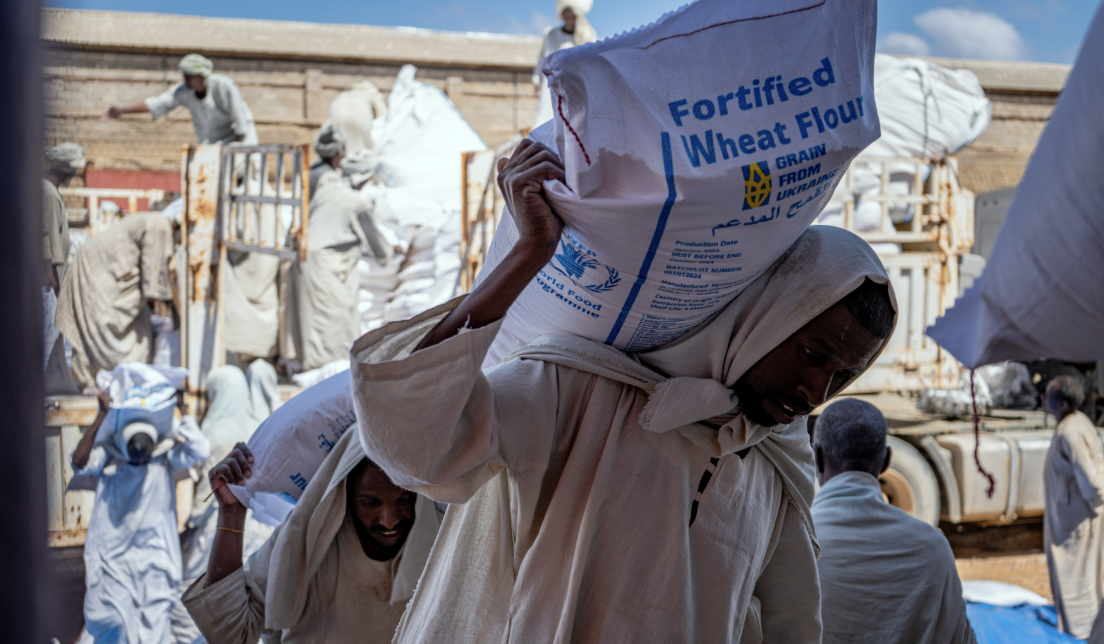
FFI continued to advance whole-wheat flour—known as atta—fortification across India in 2025 by strengthening state-level partnerships, generating evidence, and expanding opportunities to integrate fortified atta into large-scale social safety net programs. Across Haryana, Rajasthan, and Maharashtra, FFI engaged government stakeholders, convened millers, and supported technical discussions to move from pilot efforts toward sustainable, scalable models.
A key milestone in 2025 was the development of a policy brief outlining the opportunity to provide fortified atta through the Public Distribution System (PDS), one of the world’s largest food safety net programs. The brief highlights the significant burden of micronutrient deficiencies in India, including persistently high rates of anemia and neural tube defects, and presents fortified atta as a cost-effective, high-impact solution to address these challenges at scale. The brief was shared at meetings with high-level stakeholders to advocate for improved nutrition through fortified atta.
Evidence from Haryana demonstrates both the feasibility and impact of FFI’s strategy. Between 2018 and 2023, fortified atta distribution reached more than 3 million beneficiaries and was associated with meaningful reductions in iron, folate, and vitamin B12 deficiencies. Beneficiaries also showed a strong preference for receiving atta instead of wheat grain, with higher program uptake and reduced time and cost burdens.
The brief further underscores that distributing fortified atta through PDS can be economically sustainable. By reducing the need for household-level processing and aligning costs across government, millers, and beneficiaries, fortified atta offers a practical pathway to improve nutrition outcomes while maintaining program efficiency.
The brief lays out two beneficiary pricing options for the Government of Haryana to recover its ₹4.55/kg cost of milling and distributing fortified atta: charging ₹5/kg for a full 5 kg allocation (yielding roughly ₹6B in revenue against ₹5.46B in government expenses, for a net surplus of about ₹540M) or charging ₹4/kg for a reduced 4.85 kg allocation that accounts for the 3% cleaning/screenings loss (yielding about ₹4.8B in revenue against ₹4.5B in expenses, for a net surplus of ₹300M+). Both models are designed so that beneficiary payments cover the government’s milling, packaging, and transport costs while still undercutting the ₹5.90/kg beneficiaries currently pay to mill wheat grain at local chakkis, making fortified atta distribution self-funding rather than a net cost to the state.
Distributing Fortified Atta Instead of Grain Is Economically Sustainable for the Government of Haryana
In February 2026, the Government of India temporarily suspended distribution of fortified rice through PDS and other government-supported programs schemes, after a government-commissioned study by IIT Kharagpur found that prolonged storage in central pool warehouses—often lasting two to three years—led to degradation of the iron, folic acid, and vitamin B12 blended into fortified rice kernels, undermining the intended nutritional benefits. The government stated the fortification process will remain paused until a more robust and effective nutrient delivery mechanism is developed and operationalized, and clarified that the pause would not reduce foodgrain entitlements or affect distribution volumes under existing welfare schemes.
The development drew a mixed response: civil society groups who had long called for an end to the rice fortification program welcomed the suspension, while rice kernel producers and millers were caught off guard, with industry representatives suggesting the transition should have been phased in with the next crop season rather than halted abruptly. This shift in the rice fortification landscape reinforces the relevance of FFI’s continued work advancing fortified atta through the PDS in states like Haryana, Rajasthan, and Maharashtra—offering a complementary, and in some ways more resilient, pathway to close India’s persistent micronutrient gaps as the government reassesses its broader fortification strategy across staple grains.
While challenges remain—including policy hesitancy and implementation barriers—FFI’s continued engagement with state governments, technical partners, and civil society is building momentum. As India explores pathways to strengthen its food systems, empowering state governments to distribute fortified atta through PDS represents a scalable opportunity to deliver essential nutrients to millions and drive measurable improvements in public health.