
Resources
Tools
Birth Defect Surveillance
Includes a manual for program managers and an online, self-paced course for health professional or other interested individuals – English, Español, Français

Photo: Steve Evans
Birth Defects Surveillance: A Manual for Program Managers is a tool for the development, implementation, and ongoing improvement of a birth defects surveillance program, particularly for countries with limited resources. The focus is on population-based and hospital-based surveillance programs. Any country wishing to expand its current hospital-based program into a population-based program, or to begin the initial development of a population-based registry, should find this manual helpful in reaching its goal. This manual is a collaborative effort between the World Health Organization (WHO), the National Center on Birth Defects and Developmental Disabilities from the United States Centers for Disease Control and Prevention (CDC) and the International Clearinghouse for Birth Defects Surveillance and Research (ICBDSR). It is available in English, Español, and Français.
Online Self-paced Course on Birth Defect Surveillance and Prevention is designed for clinicians, epidemiologists, public health professionals, and anyone interested in understanding birth defects and improving their prevention and care. The course includes videos, quizzes, a discussion forum, and publications/resources. It was developed by the International Centre on Birth Defects (ICBD – ICBDSR Centre) and supported in part by funding from the CDC’s National Center on Birth Defects and Developmental Disabilities through an agreement with the Task Force for Global Health. Once registered, you will receive access credentials, choose English or Español, and begin the course at your own convenience.
Blueprint for Food Fortification Program Design & Implementation
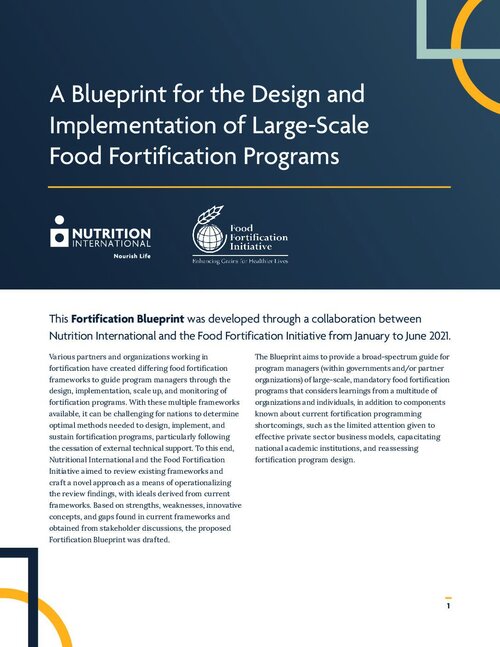
Produced in partnership with Nutrition International, “A Blueprint for the Design and Implementation of Large-Scale Food Fortification Programs” is based on a review and gap analysis of existing fortification frameworks. The Blueprint intends to refresh program thinking and priorities and provide renewed guidance concerning program components required to scale fortification initiatives and achieve nutrition impact goals. Further, the Blueprint intends to help better inform fortification programming policy and harmonize key design components, such as regulatory monitoring practices, creation of fortification standards, and identification of feasible fortification vehicles. Thus, the Blueprint aims to serve as a comprehensive guide for individuals or entities involved in leading or supporting the design and implementation of large-scale mandatory food fortification programs, including government agencies, supporting organizations, and/or individuals.
Case Studies
Offers lessons from fortification programs in Chile, Indonesia, Iran, Ireland, New Zealand, and South Africa.
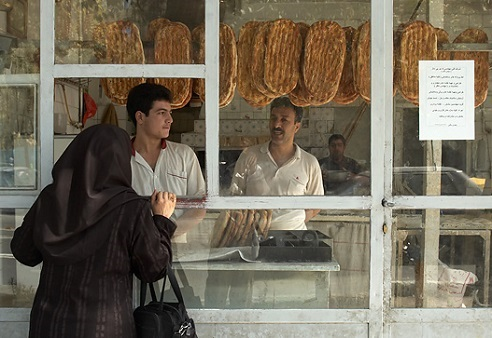
Photo: Kamyar Adl/Flickr
“Flour Fortification in the Islamic Republic of Iran: Sustainable Route to Improved Health” provides detailed information on the country’s wheat flour fortification program development.
The flour fortification monitoring systems, challenges and successes from three countries are highlighted in the following case studies:
A case study from New Zealand details the country’s long journey to mandate fortification of wheat flour with folic acid to prevent neural tube defects.
Cost:Benefit
Workshops estimate the cost of implementing fortification programs compared to the economic benefits.
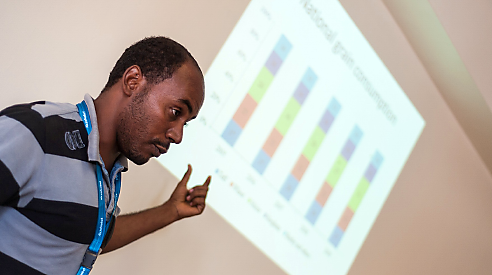
Photo: Smarter Futures
The cost:benefit tool assists countries in comparing the estimated cost of implementing a national food fortification program to the benefits the program will generate in return, also referred to as the program’s cost:benefit ratio. The tool is designed to be completed in a workshop setting with a trained facilitator. Countries need to provide data as illustrated in this spreadsheet, which is populated with data from an imaginary country called “Fortifitopia.”
For more information, contact Wilson Enzama, FFI Training and Technical Support Advisor: wenzama@gmail.com.
Document Checklist
Fortification legislation, standards, and monitoring often miss key items. Use this checklist to review your materials – English, Français, Russian, Español.

A review of grain fortification monitoring documents from 68 countries indicates that key elements are generally missing from the material. To help countries revise their documentation or establish new programs, the review authors created a 44-point checklist with sample text for food fortification legislation, standards, and monitoring policies.
Un examen des documents de 68 pays sur l’enrichissement des grains entiers constate que des éléments clés sont généralement omis de la documentation. Afin d’aider les pays à réviser leur documentation ou à élaborer de nouveaux programmes, les auteurs de l’examen ont créé une liste de vérification en 44 points, accompagnée d’un échantillon du type de langage à utiliser en ce qui a trait aux mesures législatives, les normes et les politiques de surveillance sur l’enrichissement des aliments.
Авторы проанализировали содержание документов, используемых в качестве руководства для Законодательство, правила ируководящие принципы были получены от стран с обязательной фортификацией пшеничной, кукуруризисикой кукуруриризисовой Данный вопросник и список критериев был создан на основе передовых практик и включает 44 пункта , которые должны быть включены в документы по фортификации.
Una nueva lista de 44 puntos para la legislación y estándares en fortificación de alimentos, y normas y políticas de monitoreo, is available for su uso in the revisión or el establecimiento de programas de fortificación.
FortifyMIS
Fortify Management Information System (FortifyMIS) is an online data collection and aggregation approach for food fortification monitoring
FortifyMIS is an online data collection and aggregation approach for fortification monitoring. The Management Information System (MIS) provides an improved means for food producers and government inspectors to monitor the quality of fortified products while providing decision makers with timely information to improve program performance.
FortifyMIS aims to:
Simplify the process of compliance data collection for national-level food inspectors and food producers
Improve how food control agencies are informed of implementation challenges
Developed by Project Healthy Children (PHC) and the Global Alliance for Improved Nutrition (GAIN), FortifyMIS can be used on computers, tablets, and handheld mobile devices. It allows for automatic tracking of fortified food quality and safety data using customizable digital forms, real-time dashboards, and tailored data reporting methods.
The platform aims to reduce the time and cost of monitoring and improve overall program performance by quickly tracking the quality of foods and identifying where improvements are needed. By using FortifyMIS, national governments and fortification stakeholders can better capture critical data needed to improve data-driven program outcomes.
The FortifyMIS platform provides:
A practical data aggregation solution for country-specific use;
More efficient and effective tracking of product compliance in real time to better understand whether fortified foods contain the amounts of vitamins and minerals per national standards; and
Data needed for countries to identify and act upon gaps to improve program outcomes in a timely, cost-effective, and sustainable manner.
By ensuring the delivery of adequate nutrients to target populations, FortifyMIS will be an integral component of global and national efforts to improve the nutritional benefits that fortification programs can offer to millions of consumers.
Users need their own login and permissions to view country data.
To see how the system works in training mode, contact Laura Rowe: laura.rowe@ffinetwork.org.